







Description
An easy-to-use test for detecting the presence of Pseudomonas bacteria that facilitate iron uptake by plants.
DESCRIPTION
Field test to detect and quantify the following Pseudomonas bacteria in soil or aqueous samples:
> Pseudomonas fluorescens
> Pseudomonas putida
> Pseudomonas chlororaphis
> Pseudomonas aeruginosa
> Generally, all Pseudomonas species that secrete pyoverdin
Pseudomonas fluorescens and Pseudomonas putida are biofacilitators and bioremediators that improve plant health when present in the soil. They are classified as PGPR, an acronym for "Plant Growth-Promoting Bacteria."
Pseudomonas fluorescens:
- protects plants from pathogenic fungi because it grows quickly and leaves them little room to take hold
- increases the bioavailability of iron through the production of siderophores such as pyoverdin, as well as that of phosphorus
- promotes plant growth by stimulating root development
- stimulates the plant's defense genes, making them better prepared in the event of a pathogen attack
Pseudomonas putida:
- remediates contaminated soil
- binds heavy metals
- helps plants cope with water or salt stress
- increases the bioavailability of iron through the production of siderophores such as pyoverdin, as well as that of phosphorus
This applies in particular to market gardening, horticulture, truffle farming, and, more generally, all types of crop farming.
PROBLEMS
Pseudomonas fluorescens in truffle fields
The soil in truffle fields should normally have a pH between 7.5 and 8.5, meaning it is slightly alkaline. However, iron availability is at its lowest precisely between a pH of 7.5 and 8.5 because iron exists almost exclusively in a solid state, which is less bioavailable than iron in solution. In this context, truffle trees can suffer from iron stress, known as iron chlorosis. For their part, Pseudomonas bacteria also experience this iron stress but circumvent it by secreting pyoverdin, a powerful fluorescent iron chelator that allows them to solubilize iron through the iron-pyoverdin complex. The black truffle (Tuber melanosporum) uses these iron-chelating bacteria for its own iron needs and also to supply truffle trees. Pseudomonas also plays a role in the truffle’s aroma because they are trapped within the truffle fruit from the very beginning of its formation.
HOW IT WORKS
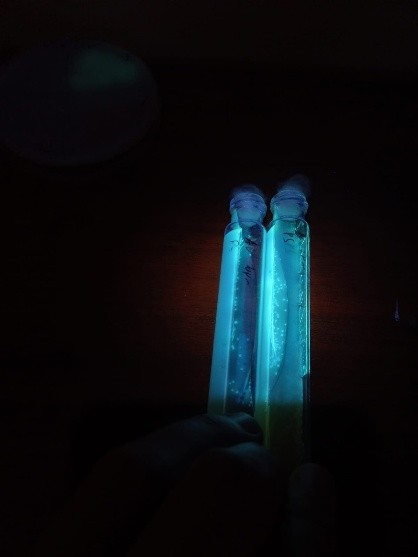
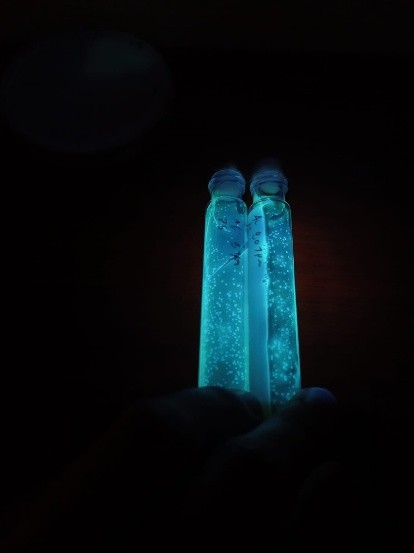
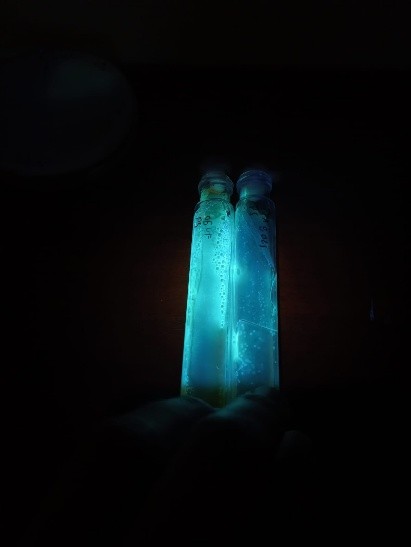
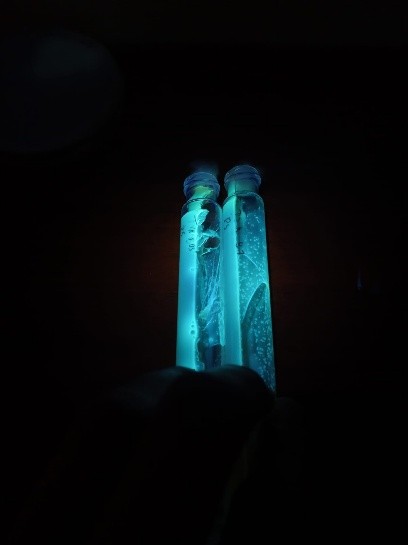
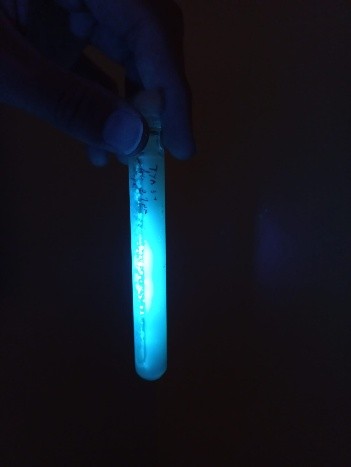
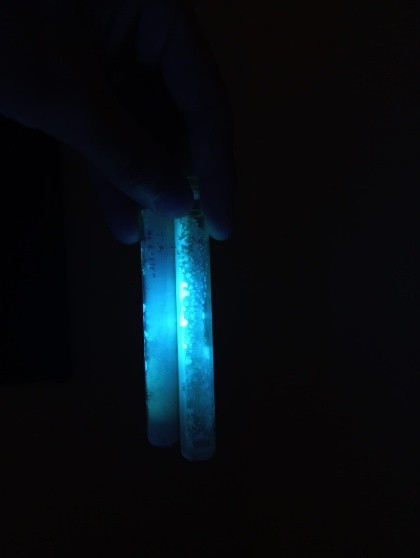
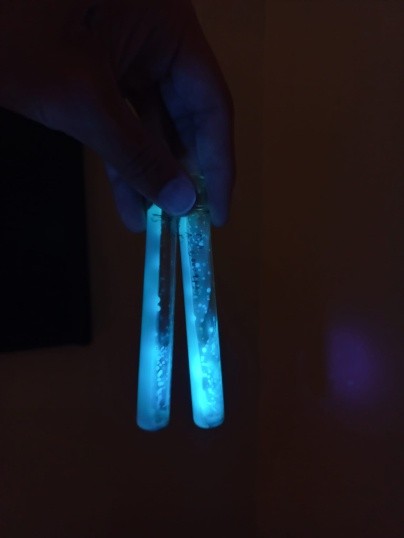
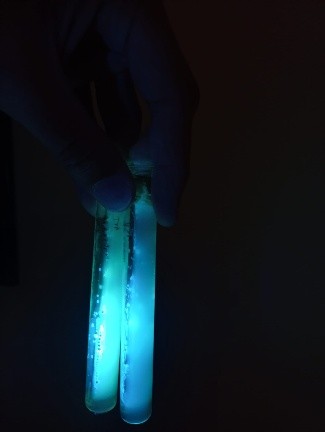
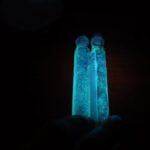
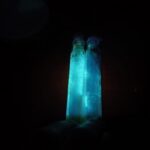
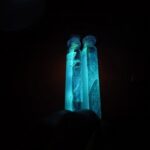
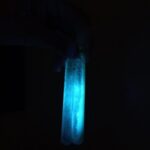
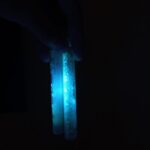
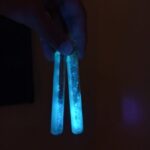
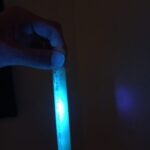
When exposed to UV light (blue), the test emits green fluorescent light if the result is positive.
The light stays blue if the result is negative.
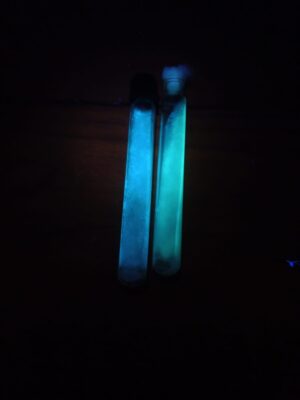
On the left, a negative test; on the right, a positive test.
SCIENTIFIC ARTICLES
Pseudomonas fluorescens:
-
- The Eco-Friendly Role of Serratia marcescens and Pseudomonas fluorescens in Enhancing Rice Growth and Mitigating Cadmium Toxicity via Uptake Modulation and Antioxidant Regulation
Alhaj Hamoud, Y., Shaghaleh, H., Saleem, M.H., et al.
DOI: 10.1186/s12870-025-06693-6 - Pseudomonas fluorescens: A Promising Biocontrol Agent and PGPR for Sustainable Agriculture
Panpatte, D.G., Jhala, Y.K., Shelat, H.N., Vyas, R.V. (2016)
DOI: 10.1007/978-81-322-2647-5_15

Notice
There's no notice yet.